Blog Summary
Paper wasps, yellowjackets, and hornets are all social wasps — but they differ in size, color, and nesting habits. Here's a quick breakdown:
- Paper wasps — Slender, ~1" long, reddish-orange to dark brown with yellow markings. Build open, umbrella-shaped papery nests on eaves and overhangs. Less aggressive than the other two.
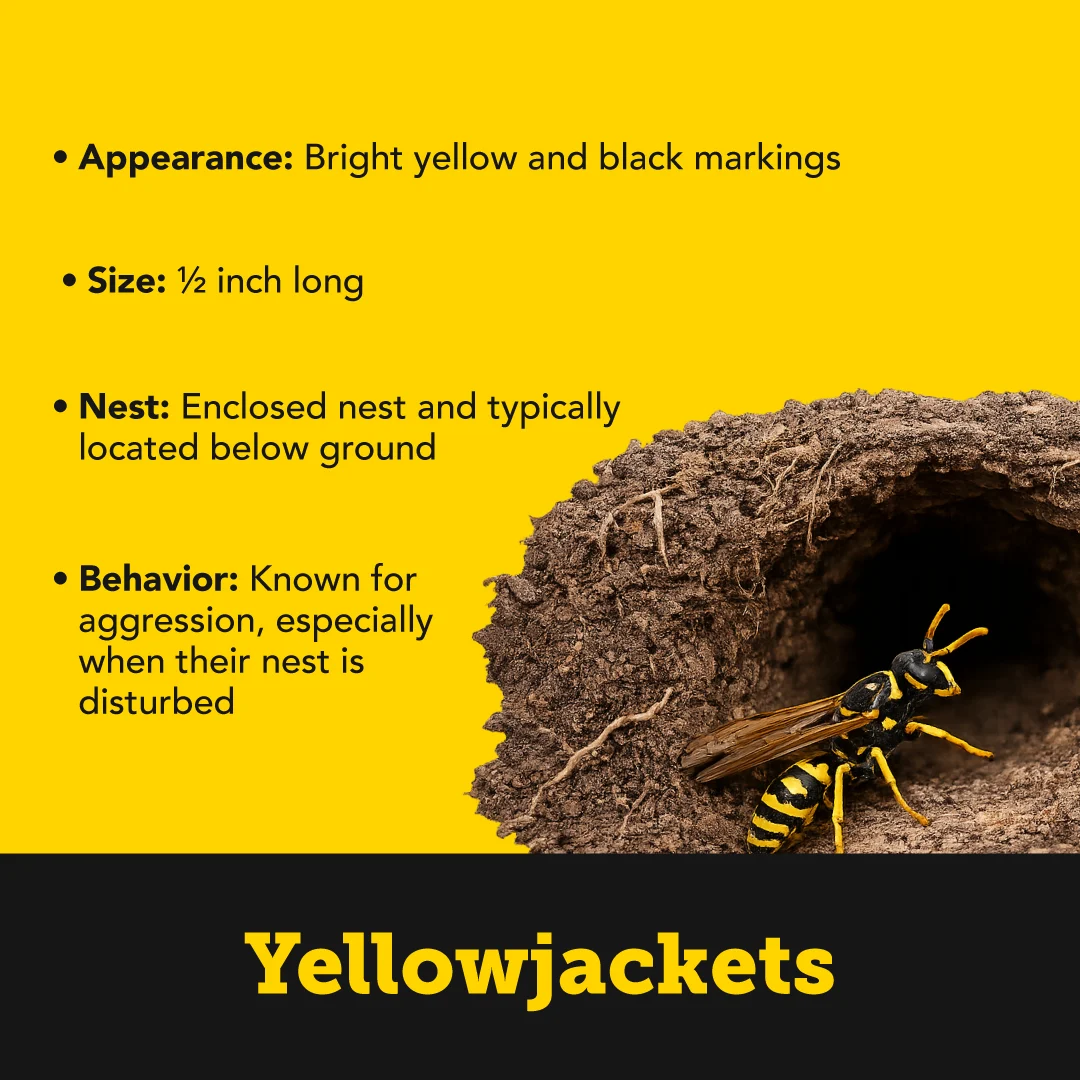
- Yellowjackets — The smallest at ~½", bright yellow and black. Nest underground or in wall voids. Most aggressive, especially in late summer.
- Bald-faced hornets — About ¾", black with gray bands. Build large enclosed nests in trees. Colonies can exceed 100 workers.
All three can sting repeatedly and will defend their nests aggressively. If you've spotted a nest near your home, contact Plunkett's for removal.
Paper wasps, yellowjackets, and hornets all fit into the same category of wasp: social wasps. They all produce colonies every year with only the queen surviving winter. But despite their similarities, these pests differ in size, color, and where they build their nests.
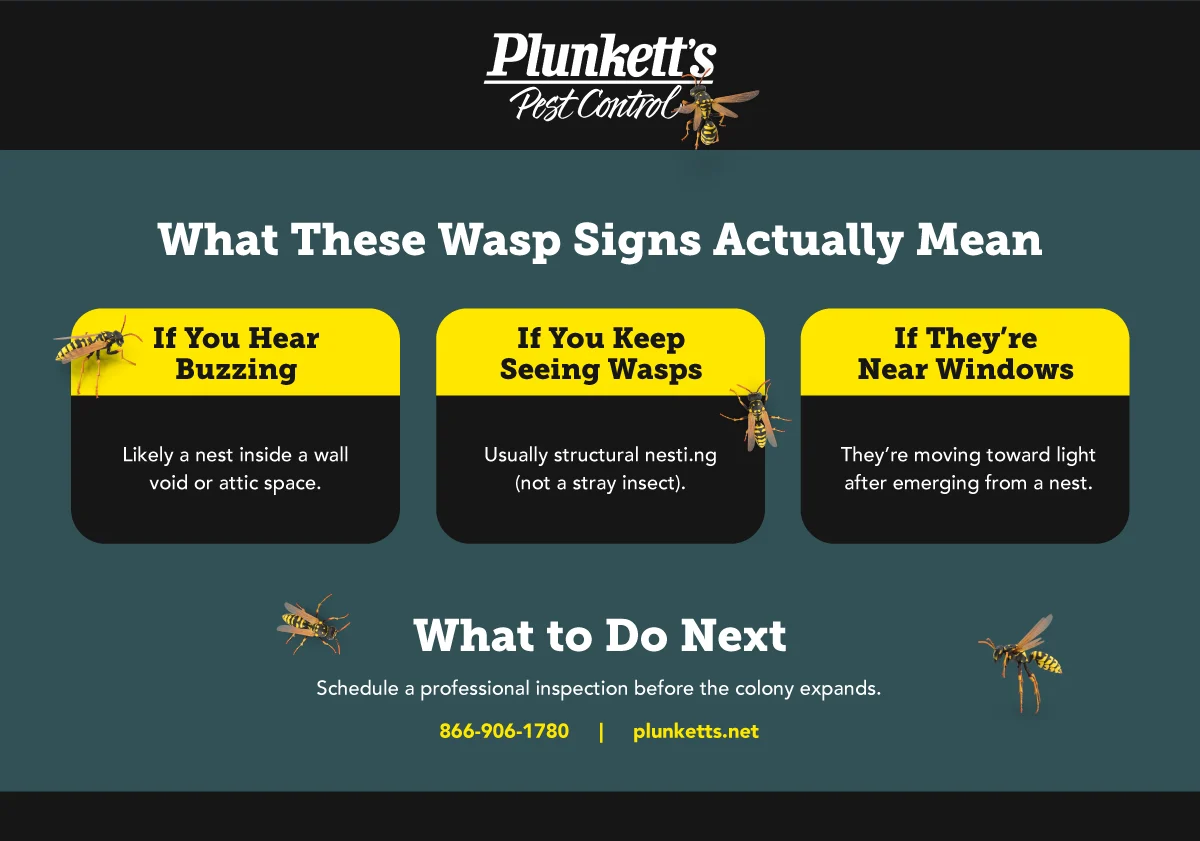
Wasps can be beneficial to your space by eating other pests. However, they are still aggressive stinging insects. There’s a good chance that if you’ve seen one flying around your yard or in your home, you don’t care if it’s a paper wasp, yellowjacket, or hornet… you just want it gone. But knowing the difference between the three can help you avoid stings, get to the root of your problem, and then solve it!
Social vs. Solitary Wasps
There are two categories of wasps: solitary and social.
- Solitary wasps aren’t aggressive and rarely sting (like potter wasps, spider wasps, and mud daubers, for example).
- Social wasps are the wasps that swarm around you at your barbecue.
Hornets, yellowjackets, and paper wasps are all social wasps. All three live in large colonies with one queen. They commonly have narrow wings that fold longitudinally, nests made of recycled wood fibers, and, of course, the ability to sting repeatedly. Now that we’ve covered their similarities, let’s go over what sets these pests apart.
Paper Wasps, Yellowjackets, and Hornets: What’s the Difference?
%20(1)%20(1).png?r=OxGSVWmwEIA=)
Paper Wasps
Paper wasps are slender insects about 1" long, with notably long legs and narrow bodies. Their coloring varies by species, ranging from reddish-orange to dark brown or black, often accented with yellow markings. They're easy to spot in flight by their distinctive silhouette, since their long legs dangle conspicuously beneath them, giving them a graceful, almost lazy appearance.
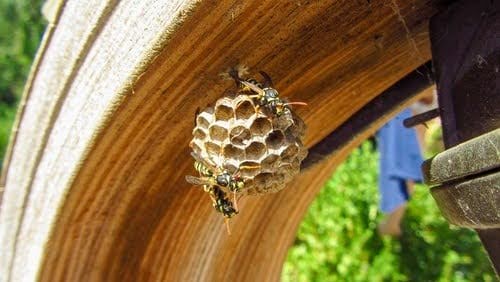
These wasps get their name from the papery nests they build by chewing wood fibers and mixing them with saliva. The result is an open, umbrella-shaped nest with visible hexagonal cells, typically suspended by a single stalk from eaves, window casings, porch ceilings, or tree branches. Colonies are relatively small, generally numbering fewer than 100 wasps, and paper wasps are considered less aggressive than hornets or yellowjackets.
.png?r=WFGDctOeE6k=)
Bald-Faced Hornets
Bald-faced hornets are about ¾" long with black bodies and gray bands. Despite the name, they're more closely related to yellowjackets than to true hornets like the European hornet.
Bald-faced hornets build massive, enclosed nests that hang from sturdy perches like tree branches, and their colonies can contain over 100 wasps. For comparison, the less common European hornet is much larger—about 1.5" long—with a brown body and yellow stripes.
.png?r=M9tJCSUHmS8=)
European Hornet (Top) Bald-Faced Hornet (Bottom):
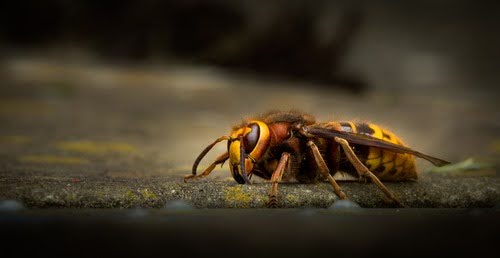
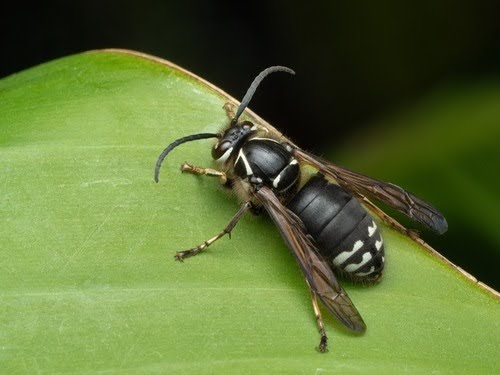
Yellowjackets
Yellowjackets are the smallest of the three stinging insects, measuring about ½" in length. They're often mistaken for honey bees due to the bright yellow and black markings on their bodies, though yellowjackets have a smoother, shinier appearance and a more defined waist. In flight, they're easy to distinguish from paper wasps because they tuck their legs tightly against their bodies, giving them a sleeker, more compact silhouette.
Like hornets, yellowjackets build fully enclosed nests, but theirs are typically located underground in abandoned rodent burrows or other cavities. Some species also nest inside wall voids, attics, or hollow logs. Yellowjacket colonies can grow quite large, sometimes containing thousands of workers by late summer, and they're known for being especially aggressive when their nests are disturbed.
.png?r=5CAwRRymvGs=)
Why Do I Often Have Wasp Nests Near My Home?
If you frequently have wasp nests in your yard or around your home, it’s probably because you have a few of their favorite things, including:
- Overhangs. This is where paper wasps prefer to build nests. They often choose a corner spot where their nest will be protected.
- Weathered wood. This is also a paper wasp favorite. They build their nests out of regurgitated wood fiber.
- Other pests. Wasps eat other pests. So, if wasps are setting up shop in your yard, it likely means there are plenty of other insects nearby as well.
- Indoor shelter. Wasps like to build their nests near accessible indoor shelter so their queens have a place to seek shelter in the winter. If your home has cracks or holes where wasps can sneak inside, then your yard may be their go-to nest-building spot.
Learn more about how to get rid of wasp nests or contact Plunkett’s for efficient and reliable wasp removal!
How Can I Avoid Wasp Stings?
Social wasps will attack you if you disturb their nests. In the late summer, they will even sting if you simply get too close. To avoid getting stung, do your best to not disturb a wasp nest. If you do so by accident, stay far away from the nest until the wasps have settled down. This is particularly difficult to do with yellowjacket nests since they are underground and difficult to detect. Try to keep an eye on where they are burrowing.
If you know you’re going to be around a wasp nest, wear a long-sleeved shirt and pants to cover as much of your skin as possible. If a wasp lands on you, try to stay calm until it flies away. It’s also important to keep an eye on your sugary drinks! Wasps love pop, beer, and other sugary beverages. Remind your picnic guests to watch out for the stinging insects.
Rid Your Home of Wasps With Plunkett’s
Although wasps can rid your space of other pests, they can be a dangerous nuisance. The best way to avoid wasp stings and an infestation is to get help from a professional pest control company like Plunkett’s. Our expert technicians can quickly and safely remove wasps to give you peace of mind this summer. If your yard is a popular hangout spot for wasps, get in touch with us right away.