Blog Summary
Wood ticks (American dog ticks) are reddish-brown, flat, oval arachnids about 3/16" long, common throughout the Midwest — especially Iowa, Minnesota, and Wisconsin. They wait on grass and shrubs to latch onto passing hosts. Wood ticks don't spread Lyme disease, but they can transmit Rocky Mountain spotted fever and Tularemia, making quick removal important. Check yourself and pets after time outdoors, and trim overgrown vegetation to reduce risk.
When spring gives way to summer, tick season arrives in full force. Not only do ticks latch onto your skin and suck your blood, but they also transmit dangerous diseases. Plus, these arachnids have no qualms about attaching themselves to your pets.
We’ve created this guide to help you navigate the season without fear of wood ticks and their bites. We cover identification, tick-borne disease, life cycle, and protective strategies. For help reducing the tick population on your property, we’re here to help!
Wood Tick Identification Guide
The tick you’re probably most familiar with is the wood tick, which is more visible than its smaller cousin, the deer tick.
What Are Wood Ticks?
Dermacentor variabilis—also known as a wood tick or American dog tick—is a species of tick that is known to carry bacteria responsible for several diseases in humans including Rocky Mountain spotted fever and Tularemia. These diseases spread when the tick sucks blood from the host.
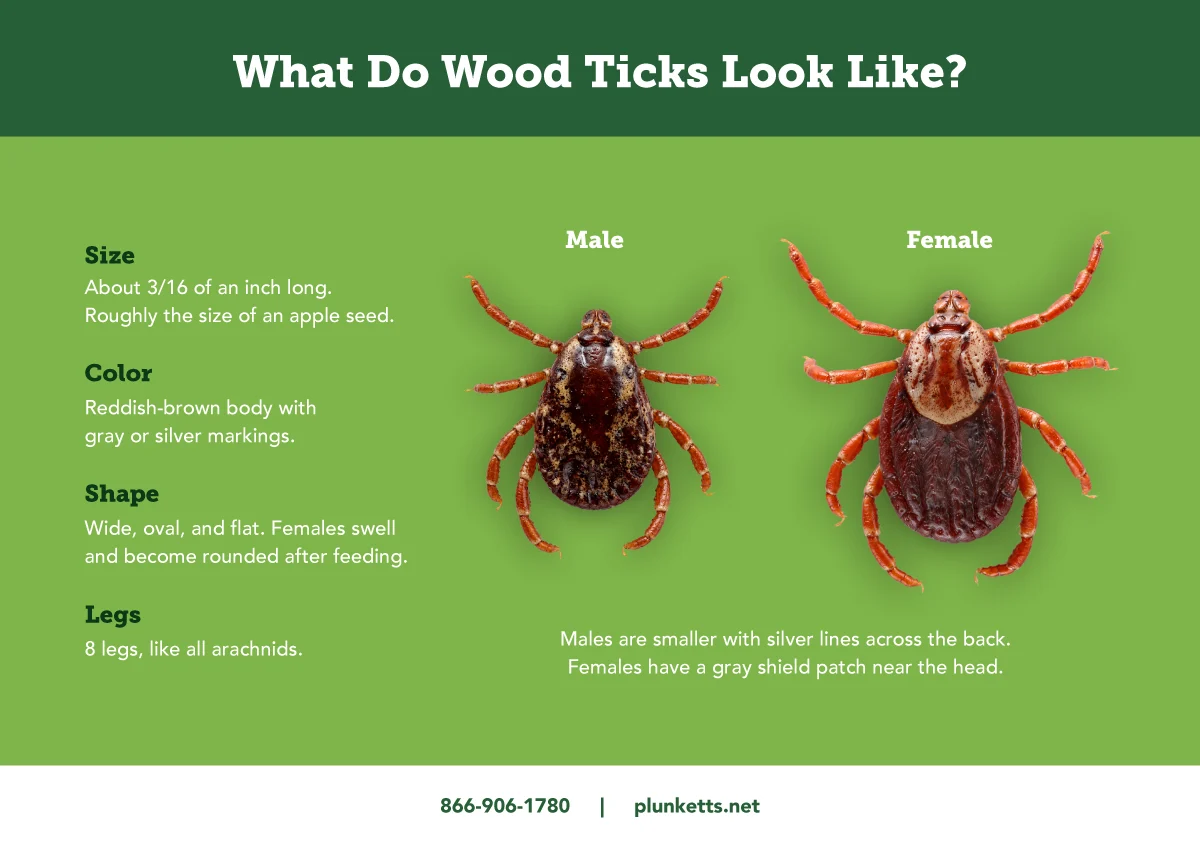
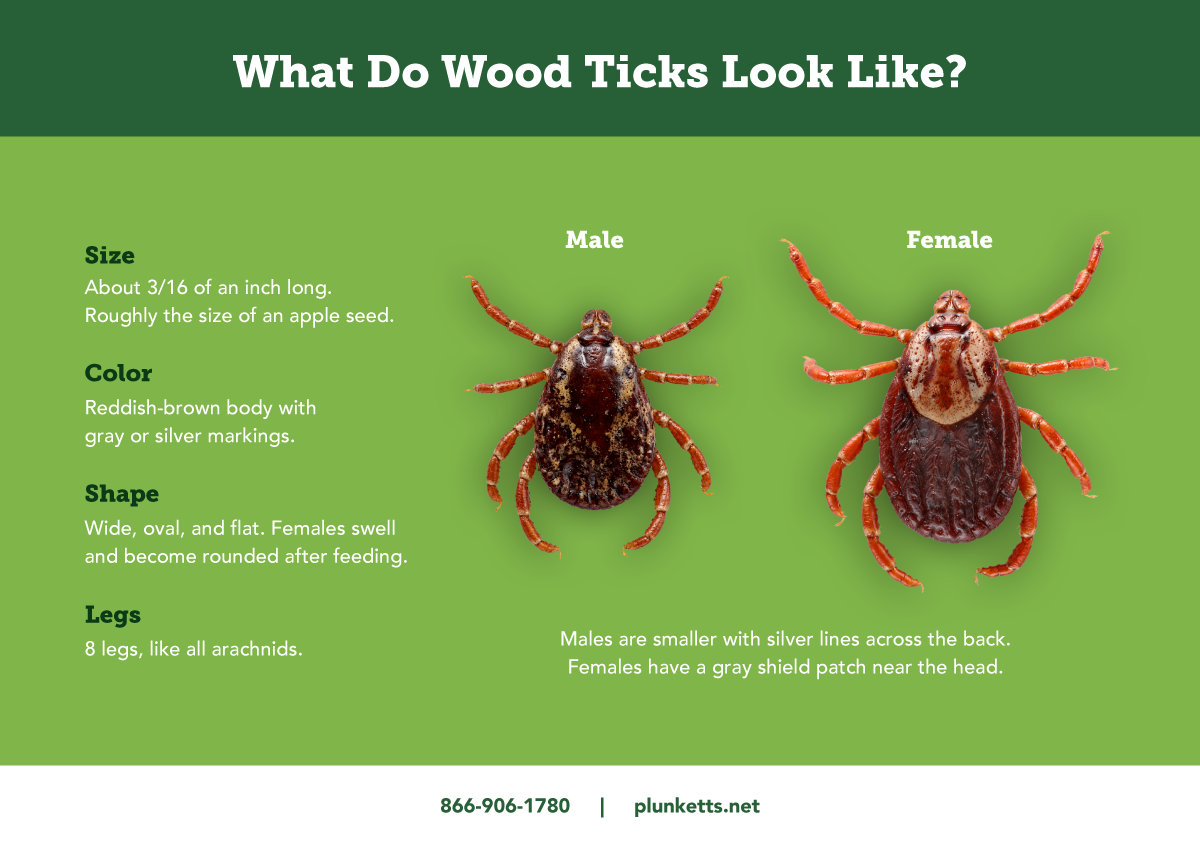
Wood ticks have wide, oval-shaped, flat bodies. They are bright reddish-brown in color with gray or silver coloration on their bodies. They grow to about 3/16 of an inch long.
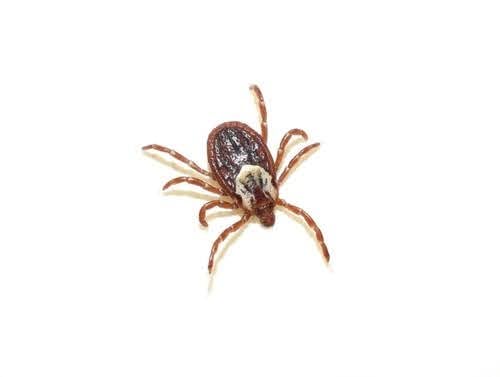
If you notice an engorged wood tick, it’s probably female; they become bloated after feeding. However, males tend to be smaller than females and have silver or white lines on their backs and do not expand after feeding.
How Does the Tick Life Cycle Affect Their Behavior?
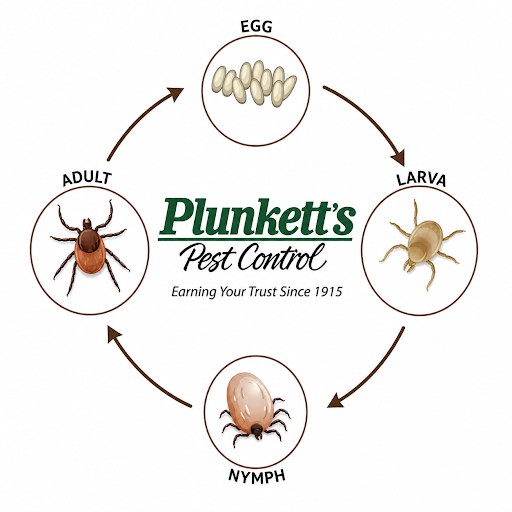
Wood ticks go through four life cycle phases: egg, larva, nymph, and adult. Each phase requires a blood meal to advance, which is why ticks seek out humans and animals.
After mating in fall, females lay 2,000 to 8,000 eggs, which hatch the following summer. Six-legged larvae emerge and seek their first blood meal, often from small animals like mice or birds. These larvae are tiny and very easy to miss. This is where pathogens can first be picked up. Larvae develop through fall, then overwinter in shelter or on a host.
Come spring, larvae molt into eight-legged nymphs and seek a larger host, like a deer or human. Any pathogen acquired as a larva can now be transmitted. After feeding, nymphs develop into adults by fall or winter.
Adults take one final blood meal before mating. Females lay eggs and die shortly after. Ticks that don't mate may enter diapause to survive the winter. The average wood tick lifespan is 2 to 3 years.
Where Do Wood Ticks Live?
Wood ticks are widely distributed throughout the Midwest and are most common in Iowa, Minnesota, and Wisconsin. Ticks like humid places with abundant vegetation such as prairies or wooded areas. On the plus side, they don’t generally infest buildings!
Wood ticks are patient feeders who will perch on a blade of grass, shrub, or leaf and wait for their prey to pass by. Fun fact: this is called questing. As the target goes past, the tick crawls on and finds a soft location to attach and eat. Ticks will gravitate toward places where they can find hosts; pets and livestock may attract wood ticks. It is also possible that wood ticks follow animal odors.
Do Wood Ticks Carry Lyme Disease?
No. Scientists do not consider wood ticks a vector for Lyme disease. They are, however, the primary transmitters of Rocky Mountain spotted fever (RMSF), with symptoms appearing 2–14 days after transmission: fever, nausea, muscle pain, and a rash around the wrists and ankles. Wood ticks can also transmit Tularemia, which causes fever, lethargy, skin ulcers, appetite loss, and swollen lymph nodes.
Disease transmission requires a minimum of 6–8 hours of continuous contact, so prompt removal is key. If you experience severe symptoms after a tick bite, save the removed tick and contact your doctor.
How Do I Identify a Wood Tick Bite?
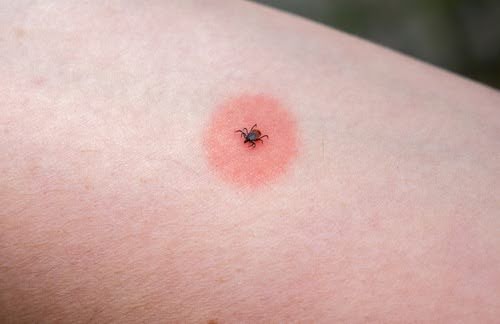
Tick bites often resemble spider bites. Look for bumps on the skin, especially red dots that are about the size of a dime. You should always check for ticks after spending time outside. They can latch on anywhere but they are partial to moist and warm areas that are lower on the body. Contrary to rumor, ticks do not “burrow" under the skin; you should be able to see attached ticks on the surface of the skin or under hair.
How Do I Remove a Wood Tick?
It’s important to remove the tick as soon as possible. Use tweezers or forceps to grip the tick’s mouthparts near the attachment site. Pull straight back slowly and carefully to avoid ripping.
Tick mouthparts are barbed, so when you remove the tick, you might pull some skin off with it. Once the tick is out, wash and treat the wound with soap and water and apply disinfectant or antiseptic ointment on the site of the bite.
Consider writing down when you removed the tick and preserving it in alcohol. If you develop infection symptoms, you can bring your tick to your doctor for identification.
Prevention & Wood Tick Pest Control Services
%20(1).png?r=yCxk8VvezU8=)
Follow these 8 wood tick prevention tips to help keep them away from you, your family, and your pets:
- Check yourself and your pet after spending time outdoors.
- Tick nymphs can be as small as a pinhead and are easy to miss. You must perform a careful and thorough inspection.
- Trim tall grass, hedges, and shrubs in your yard.
- Trim tree branches away from your home.
- Give your pet regular anti-tick treatments during tick season.
- Address rodent infestations. Larvae or nymphs often enter property on rodents.
- Apply wood tick repellent and wear tight-fitting clothing while outside. Avoid overgrown paths when possible.
- Put outdoor clothes in the dryer on high for 10 minutes to kill ticks.
How Do You Get Rid of Wood Ticks? Plunkett’s Pest Control!
If you have a tick issue in your home or on your property, give Plunkett’s a call today. We can treat problem areas to control tick populations and keep your family safe.