
Asian Lady Beetle / Ladybug Infestation Pest Control
Do you have an Asian lady beetle infestation in or near your property? Schedule a service with Plunkett’s today!
The True Culprit: The Asian Lady Beetle
What’s The Difference Between an Asian Lady Beetle & a Ladybug?
A quick note: throughout this page, we’ll use "ladybug" and "Asian lady beetle" somewhat interchangeably, because that's how people talk about them and our main goal is to rid your home of pests. That said, it's worth knowing the difference.
Ladybugs are harmless, beneficial garden insects, while Asian lady beetles are invasive look-alikes that swarm homes in fall and winter. They can "bite" by scraping skin, and release a smelly yellow fluid that stains when threatened or crushed.
Quick ways to tell them apart:
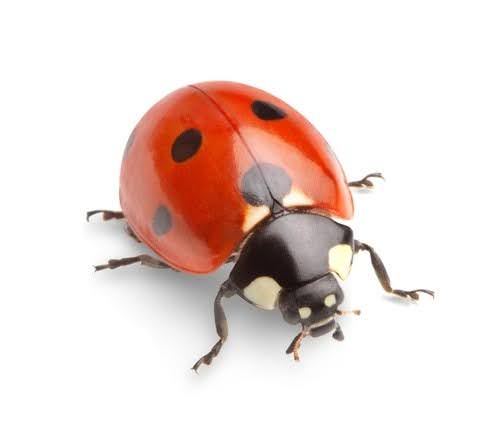
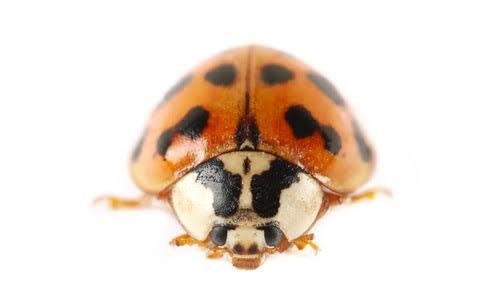
- Head marking: Asian lady beetles have a white head with a black "M"; ladybugs have a black head with small white "cheeks"
- Shape & size: Ladybugs are smaller and rounder; Asian lady beetles are larger and more oval
- Color: Ladybugs are always bright red with black spots; Asian lady beetles can be red, orange, or tan, with or without spots
If you’re looking for ladybug control because you’ve got an infestation, it’s likely an Asian lady beetle infestation.
Ladybug:
Asian Lady Beetle
Where You’ll Find a Ladybug / Asian Lady Beetle Infestation
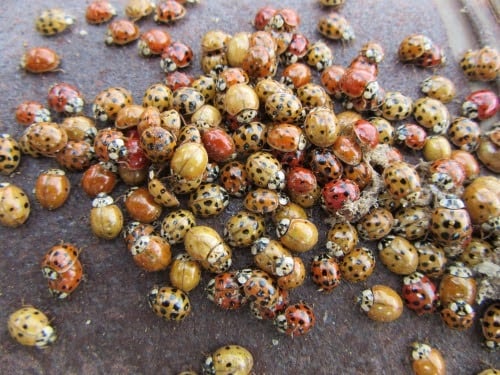
Lady beetles are attracted to sunnier areas and will congregate on the southwest sides of a structure. Attics, wall voids, and other protected locations tend to be where they gather most often.
They gain entry through cracks around doors and windows, behind the siding and other areas that are susceptible to a pest infestation.
Asian lady beetles can fit through openings as small as ⅛” in size, making homes easily accessible.
Signs of an Infestation
Asian lady beetles may look harmless, but once they decide to overwinter in your home, the signs are hard to miss. Watch for these common red flags:
- Large clusters on sunny exterior walls, especially the south and west sides in early fall
- Swarms on windows, screens, and sliding glass doors — they're drawn to warm, reflective surfaces
- Beetles indoors in fall, winter, or early spring (native ladybugs overwinter outside, so indoor beetles usually mean Asian lady beetles)
- Yellow stains and a musty odor from "reflex bleeding" on walls, curtains, or fabrics
- Piles of dead beetles in window tracks, attic corners, light fixtures, or behind blinds
If you're seeing these signs, the swarm can grow fast. Schedule a service or call 866-906-1780 and Plunkett's will send these impostors packing.
Lady Beetle Infestation Prevention
Prevention is key. Once lady beetles are inside, your only options are vacuuming them up or treating heavy infestations with an insecticide spray, which is a tedious process that often has to be repeated.
The most effective solution is calling Plunkett’s at the first sign of activity (or better yet, before). Our exterior treatments target Asian lady beetles and other fall invaders before they ever reach your walls, dramatically reducing the population around your home and preventing them from making it inside.
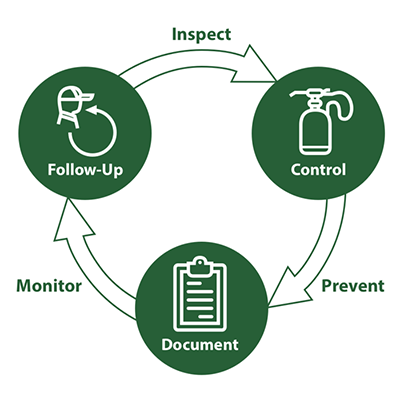
Our Pest Control Process: Ladybugs & Asian Lady Beetles
Controlling a beetle infestation is a difficult task. And while sealing cracks and spaces around doors, windows, and foundations is helpful, it may not completely deter these nuisance pests.
That's where Plunkett's comes in. Our process starts with a thorough inspection of your property— inside and out. Our trained technicians identify active hot spots, locate entry points around windows, doors, eaves, vents, and siding, and pinpoint the warm, sunny exterior walls where Asian lady beetles love to gather before slipping inside.
From there, we put preventative measures in place. We apply targeted exterior treatments to the areas beetles use to access your home, recommend exclusion work to seal off vulnerable gaps, and treat any active interior populations so the swarm doesn't grow.
Finally, we monitor your property to keep it protected long-term. Asian lady beetles return to the same homes year after year, so our team checks back on treated areas, adjusts our approach as conditions change, and stays ahead of the seasonal swarms.
If lady beetles have infested your property, call Plunkett's Pest Control. And for preventative measures, learn more about our Fall Invader Program.
Lady Beetle Pest Control Pricing
Fall Preventative Treatment (Home or Cabin)
- Homes up to 5,000 sq ft: $225
- Homes over 5,000 sq ft: $345
- Additional outbuilding: $59
Winter / Spring Treatment
- Limited interior-only treatment: $149
Late Spring / Summer Treatment
- Limited exterior treatment: $179
No guarantee on services for cluster flies, Asian lady beetles, or box elder bugs.
Asian Lady Beetle Control With Plunkett’s
At Plunkett’s, our goal is to help you quickly, conveniently, and in the most cost-effective way. We make every effort to be with you asap, usually within a day or two.
Frequently Asked Questions
Why do I suddenly have ladybugs all over my house?
What you’re likely seeing are Asian lady beetles, not true ladybugs. Each fall, they leave their outdoor feeding areas and look for a warm place to spend the winter. They’re drawn to the south- and southwest-facing sides of homes and buildings. Once they find a way in, others follow quickly, which is why numbers can build up fast.
How do ladybugs get into my house?
Asian lady beetles can fit through openings as small as 1/8 of an inch. Common entry points include cracks around windows and doors, gaps behind siding, and damaged window screens. Sealing these areas before fall is one of the best things you can do to keep them out.
What will kill ladybugs inside my house?
If you have Asian lady beetles inside, vacuuming them up is a good first step. Avoid crushing them, as this can trigger staining and odor. An insecticide spray can also be used on larger indoor populations. For significant infestations, contacting a pest control professional is the most effective option.
Why are there orange or tan ladybugs in my house?
Asian lady beetles vary in color. They can be red, orange, or tan, and may have few or no spots. Color alone is not a reliable way to identify them. The “M” marking on the head and the tendency to gather on homes in fall are more consistent identifiers.
Learn More
There are a good number of flying insects that are particularly likely to make pests of themselves around your home. Some of the most common examples of flying insects Plunkett’s encounters frequently include: